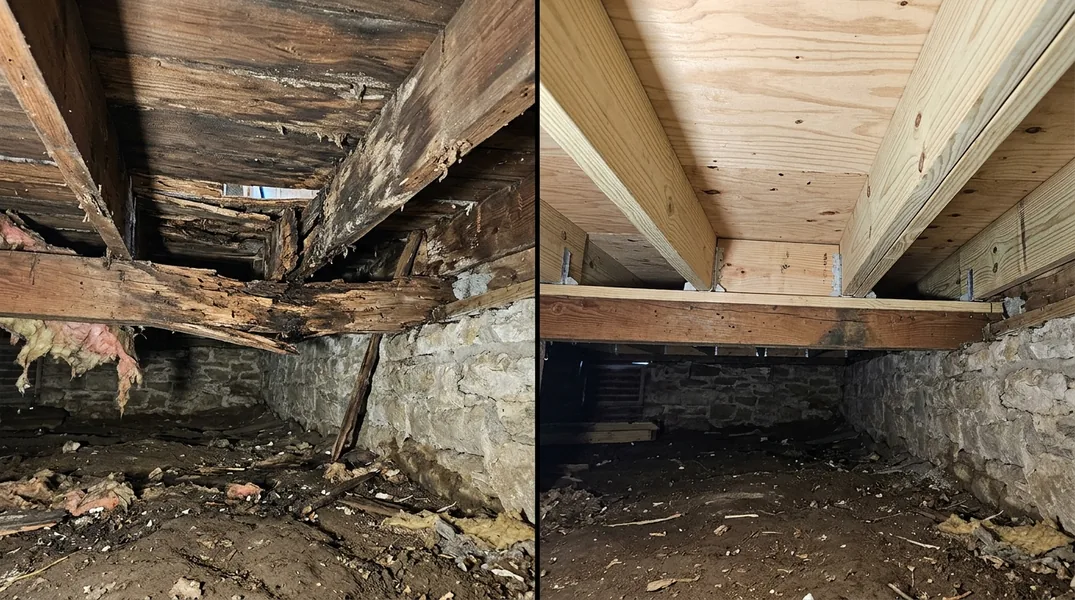
Why Old Lexington Homes Develop Sagging Floors
If you own an older home in Lexington, you may have noticed your floors aren't quite level anymore. That gradual slope or dip in the living room, hallway, or bedroom isn't just cosmetic. Sagging floors are a structural warning sign that something beneath your home needs attention.
The culprits are often interconnected. Lexington's humid climate, combined with aging crawlspaces and the region's limestone foundation substrate, creates a perfect storm for floor failure. When moisture seeps into crawlspaces over decades, wood absorbs water, loses strength, and becomes vulnerable to rot. Meanwhile, limestone footings can settle unevenly, especially if they're not properly sealed or if water has eroded the soil beneath them. The result: floor joists that were once level now sag under the weight of your home.
The Role of Crawlspaces and Moisture in Floor Deterioration
Your crawlspace is the hidden foundation of your home's structural integrity. In many older Lexington homes, crawlspaces were built with minimal insulation, no vapor barriers, and poor drainage. This means moisture naturally accumulates, and wood rot thrives. When relative humidity in a crawlspace stays above 60 percent, wood begins to absorb moisture and weaken. Floor joists that sit directly on damp soil or concrete piers become breeding grounds for fungal growth and decay.
The problem compounds over time. As floor joists lose their structural capacity, they deflect downward. This deflection increases stress on neighboring joists, which then begin to fail as well. Homeowners often don't notice the problem until the sag becomes visible or the floor feels soft underfoot. By that point, the damage is usually advanced enough to require professional repair. Proper crawlspace ventilation, moisture barriers, and regular inspections can prevent this cascade, but once it starts, Floor Joist & Subfloor Repair becomes necessary.
How Limestone Foundations Contribute to Settling and Sag
Many homes built in Lexington during the early 1900s through mid-century rest on limestone block or rubble foundations. While limestone is durable, it's not immune to the region's water and soil chemistry. When water percolates through the soil and contacts limestone, it can dissolve the mortar joints and even the stone itself over decades. Additionally, if the soil beneath the foundation isn't properly compacted or if drainage isn't managed, differential settling occurs. One side of the house may settle more than another, creating uneven stress on floor joists and beams.
This settling is gradual and often invisible until floors start to visibly sag or crack. Homeowners might notice doors that no longer close properly, cracks in drywall, or that telltale slope when you roll a ball across the floor. The limestone foundation isn't necessarily failing catastrophically, but the uneven support it provides means floor framing must compensate. Without intervention, the structural load concentrates on weakened joists, accelerating decay and sag. Understanding this regional foundation challenge is crucial for any Lexington homeowner considering repair options.
Sagging Floor Repair: Sistering Floor Joists and Real Solutions
When a floor joist is damaged by rot or has lost structural capacity, the most common and effective repair is sistering. Sistering means installing a new, pressure-treated or solid wood beam alongside the damaged joist and fastening them together with bolts or nails. This creates a composite member that's stronger than either piece alone. The new sister joist carries the load, allowing the damaged joist to be supported rather than replaced entirely. In many cases, this approach is faster, less invasive, and more affordable than full joist replacement.
However, sistering is only one part of a complete repair strategy. Before any new joist goes in, the underlying cause of damage must be addressed. If Wood Rot & Dry Rot Repair is needed, that comes first. Moisture sources must be controlled, crawlspaces must be properly ventilated and sealed, and any Termite Damage Repair must be completed. Once the environment is stabilized, sistering the joists ensures the floor is level and structurally sound again. In some cases where rot is extensive or multiple joists are affected, Beam Replacement & Load-Bearing Wall Removal expertise may be required to properly support and redistribute loads during repair.
Sagging Floor Repair Cost in Lexington: What to Budget
The cost of repairing sagging floors varies widely depending on the extent of damage, the number of joists affected, and the underlying moisture problems. A single sistered joist might cost between $500 and $1,500, while a more extensive repair affecting multiple joists and requiring crawlspace remediation could range from $3,000 to $10,000 or more. The pricing depends on labor, materials, and the complexity of accessing and stabilizing the affected areas.
It's tempting to focus only on the immediate cost, but remember that delaying repair is far more expensive. A sagging floor that worsens will eventually cause structural damage to walls, beams, and the foundation itself. What costs $5,000 to repair today could cost $20,000 if left untreated for five more years. The best approach is to get a professional assessment. Lexington Carpentry offers a free estimate so you know exactly what you're facing and can make an informed decision. Call us at (859) 710-6174 to schedule your inspection.
When to Call a Professional for Sagging Floor Repair
If you've noticed a sag in your floor, visible cracks in the foundation, or soft spots underfoot, don't wait. These are signs that structural failure is underway. While minor cosmetic unevenness in a 100-year-old home is normal, progressive sag is not. A professional carpenter or structural engineer can assess the severity, identify the root cause, and recommend the right repair strategy.
DIY floor repair is not recommended for structural issues. Floor joists carry enormous loads, and improper repair can create safety hazards or make the problem worse. Professionals have the tools, knowledge, and experience to safely stabilize the floor, address moisture and rot, and restore structural integrity. If you're in Lexington and concerned about your floors, reach out to Lexington Carpentry today. We specialize in the unique challenges that older Lexington homes face. Contact us at (859) 710-6174 or visit our website to request a free estimate. We'll help you understand the problem and get your floors level and safe again.
Looking for a professional carpentry contractor in Lexington? Lexington Carpentry responds fast for all your carpentry needs.
Get a Free QuoteOur services: Wood Rot & Dry Rot Repair · Termite Damage Repair · Floor Joist & Subfloor Repair