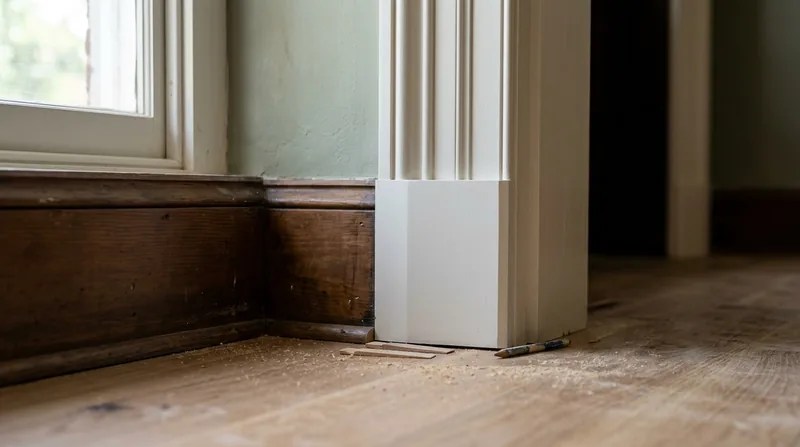




Lexington's architectural heritage spans Federal brick townhouses around Gratz Park, Victorian porches in Woodward Heights, Craftsman bungalows along Aylesford Place, and contemporary subdivisions spreading through Hamburg and Masterson Station. Whether your home is a 1920s foursquare with deep crown molding or a 1990s colonial revival, Finish & Trim Carpentry in Lexington demands precision: tight miters, scribed fits, and consistent reveals that honor the original detail or establish clean lines in newer work. We handle casing, paneling, wainscoting, custom trim, and baseboard installation throughout the Bluegrass, working with the same carpenters on every job, never subcontracting the detail work that separates craft from expedience. Humidity and seasonal moisture swings in our climate make proper fit and finish critical to longevity, and our work reflects that reality.
Why Finish & Trim Carpentry Matters in Lexington's Older Homes
Lexington's stock of historic and period homes, from the Greek Revival downtown to the Queen Anne porches of Bell Court and the Tudor Revival streets of Ashland Park, depends on finish carpentry that actually fits. Settling over limestone karst, freeze-thaw cycles, and seasonal humidity shifts all work against poorly fitted trim and casing. When gaps open between casing and jamb, or when baseboard pulls away from plaster, water finds its way in, and the repair bill grows. We install trim that closes tight, scribes to irregular plaster and masonry, and handles the quirks that come with 80-year-old walls and floors.
- We measure and fit casing and trim on-site, accounting for out-of-plumb walls and uneven floors common in Lexington's older housing stock.
- We cope crown molding joints rather than miter them, so seasonal wood movement does not open seams.
- We install baseboard and wainscoting with fastening that moves with the house without splitting the wood or pulling from walls.
- We work with original plaster, brick, and masonry without patching or filling where the trim itself can bridge gaps and fit clean.
This approach saves money on drywall repair and delivers trim that stays tight for decades, not seasons.
Local example: A 1950s brick ranch in Lansdowne with original painted baseboard and simple casing throughout had gaps opening as the foundation settled. Rather than replace every piece, we scribed new baseboard to follow the floor contour and reinstalled existing casing with flexible fastening, preserving the original paint and detail for another generation.
For guidance on permits related to interior alterations in your area, contact your local Lexington building department or visit the City of Lexington website for code and permitting requirements.
How We Approach Finish & Trim Carpentry in Lexington: The Process
Finish carpentry is not a speed trade, and it is not a one-size-fits-all trade. We begin with a site visit to understand the existing conditions, the style of your home, and the detail you want. We then measure, order material, and install with the same crew throughout, so decisions made on day one are honored on day four. Every miter is cut and test-fit on-site, every scribe is done with a compass and a sharp chisel, and every reveal is checked with a straightedge.
- We inspect the existing trim, walls, and structural elements to identify settlement, moisture, or other conditions that affect fit.
- We select material that matches the existing wood species, grain, and finish, or we propose a complementary option if replacement is cleaner than repair.
- We cut all trim components on-site or in our shop with a miter saw and table saw, testing each joint before installation.
- We fasten trim with finish nails or screws set below the surface and filled with color-matched putty, so fasteners are invisible.
- We sand all surfaces and apply stain or paint that blends with existing finishes or establishes a new, cohesive look.
This deliberate pace ensures that your trim looks intentional and lasts, whether it is crown molding in a Chevy Chase colonial or baseboard in a Hamburg subdivision home.
Lexington example: A Victorian home in the Mentelle area had original poplar casing and crown molding, some of it split or loose from seasonal movement. We removed and repaired the salvageable pieces, added new casing to match the profile, and installed everything with modern fastening techniques that allow wood to move without splitting. The homeowner kept the character and avoided the cost of replacement.
If your project also involves crown molding or baseboard installation, we handle that as part of the same visit and crew.
Finish & Trim Carpentry Methods and Techniques
| Approach | Description | Best for |
|---|---|---|
| Scribing and Custom Fitting | Trim is shaped to follow irregular surfaces, walls, or masonry using a compass and chisel, so no gaps remain. | Historic homes with out-of-plumb walls, uneven plaster, or brick that requires trim to sit flush. |
| Coped Joints on Crown Molding | One piece of molding is cut to fit the profile of the adjacent piece, allowing seasonal wood movement without opening seams. | Interior crown molding in any climate where humidity and temperature fluctuate, typical of Lexington's four seasons. |
| Miter and Biscuit Assembly | Two pieces of trim meet at a 45-degree angle with a wooden biscuit spline for strength, then stain and finish are applied to hide the joint. | Interior corners and transitions where appearance is critical and wood movement is minimal. |
| Finish Fastening and Putty | Trim is fastened with finish nails or trim-head screws set below the surface, then filled with color-matched putty and sanded smooth. | All painted trim and casing, so fasteners are invisible and the finish is seamless. |
| Stain and Finish Application | Trim is sanded, stained to match existing wood or a new color, and sealed with polyurethane or lacquer for durability and water resistance. | Stained trim, wainscoting, and built-ins where the wood grain is part of the design and protection from humidity is essential. |
Finish & Trim Carpentry Cost in Lexington: What to Expect
Finish carpentry pricing depends on the linear footage of trim, the complexity of the fit, the wood species, and the finish (paint or stain). A straightforward baseboard and casing project in a single room typically starts at $550 and scales with the size of the space and the detail involved. Custom crown molding, wainscoting, or built-ins run higher because they demand on-site fabrication and installation by hand. We provide a free estimate after a site visit, so you know the scope and cost before we begin.
The factors that move the cost up are clear: a room with plaster walls that require scribing costs more than one with drywall, because we spend time fitting each piece. Stained trim costs more than painted trim because the wood must be sanded smooth, the finish must be applied carefully, and any blemish shows. Tall crown molding or complex profiles cost more than simple casing. We are transparent about these trade-offs and help you decide what makes sense for your home and budget.
For a detailed pricing overview and examples of jobs across different scopes, visit our pricing page. Call us at (859) 710-6174 for a free estimate tailored to your project.
Finish & Trim Carpentry Near Me: What Lexington Homeowners Should Know When Hiring a Contractor
Finding a finish carpenter who delivers consistent quality is harder than finding a framing carpenter, because the work is visible and the margin for error is zero. When you are evaluating contractors in and around Lexington, Nicholasville, Versailles, and Winchester, ask for references and photos of completed work. Request an estimate that breaks down labor and material separately, so you understand what you are paying for. Check that the contractor carries liability insurance and is willing to work within any HOA guidelines or architectural review requirements in your neighborhood.
Ask whether the same crew will handle your job from start to finish. A crew that stays consistent makes better decisions and stands behind the work. Ask about the wood species being used and whether it matches your existing trim or is a complementary choice. If your project touches any original or historic trim, ask how the contractor handles preservation versus replacement. Most importantly, get multiple estimates so you can compare scope, material, and price, and do not choose based on the lowest bid alone.
We are fully insured and we welcome your questions. Contact us for a free estimate and a conversation about what finish carpentry looks like in your home.
Finish & Trim Carpentry in Lexington: Pricing Guide
| Service | Price | Details |
|---|---|---|
| Baseboard and Casing Installation | Starting at $550 | Simple baseboard and door casing in one room, painted finish, includes material and labor for straightforward drywall surfaces |
| Crown Molding Installation | Starting at $650 | Standard profile crown molding in one room with coped joints, painted finish, does not include structural obstacles or complex angles |
| Custom Wainscoting or Paneling | Starting at $1,200 | Wainscoting or board-and-batten paneling in a single room, including material, on-site fabrication, and finish application throughout |
| Scribed Trim and Plaster Fitting | Starting at $750 | Trim fitted to irregular plaster, brick, or masonry surfaces in older Lexington homes, includes custom scribing and shaping per linear foot |
| Multi-room or Large-Scale Projects | On estimate | Custom built-ins, whole-house trim replacement, or complex architectural details require on-site assessment before pricing is finalized |
| Free Estimate | No charge | Site visit, measurements, and written estimate provided within 24 hours, no obligation to book, response at (859) 710-6174 |
Indicative pricing, the exact cost depends on square footage, finish, and site access. Free personalized estimate within 24h at (859) 710-6174.


