Why Bell Court and Kenwick Homes Demand Different Care
If you own a Victorian in Bell Court or a Craftsman bungalow in Kenwick, you already know these homes have character that newer construction simply cannot replicate. The original woodwork, deep eaves, wraparound porches, and hand-finished details make these neighborhoods some of Lexington's most desirable addresses. But that charm comes with a responsibility: these homes were built 80 to 120 years ago with materials and methods that require ongoing attention.
The wood framing, siding, and structural elements in these older homes behave differently than modern construction. Victorian and Craftsman homes were typically built with slower-growth timber that has different density and moisture characteristics than today's lumber. They also lack many of the protective barriers (house wraps, vapor barriers, modern sealants) that we take for granted now. Understanding this fundamental difference is your first step toward protecting your investment and preserving your home's historic integrity.
The Most Common Wood Problems in Historic Lexington Homes
Victorian and Craftsman homes in Lexington face predictable wood damage patterns because of our climate and the age of these structures. The most frequent culprit is moisture intrusion, which leads to Wood Rot & Dry Rot Repair needs. Porches are especially vulnerable because they're exposed to rain, snow, and temperature swings. The underside of porch decking, the areas where columns meet the foundation, and the soffit and fascia boards are the first places rot establishes itself.
Beyond rot, historic homes often deal with Termite Damage Repair issues that compound over decades. Termites and other wood-boring insects can hollow out structural members without obvious exterior signs until significant damage has occurred. Wood siding, especially on the north and west exposures where moisture lingers longest, deteriorates faster. Cracks in paint, soft spots when you press on the wood, and areas where siding pulls away from the wall are all warning signs that professional inspection is overdue.
Victorian Porch Repair: Where Beauty Meets Structural Reality
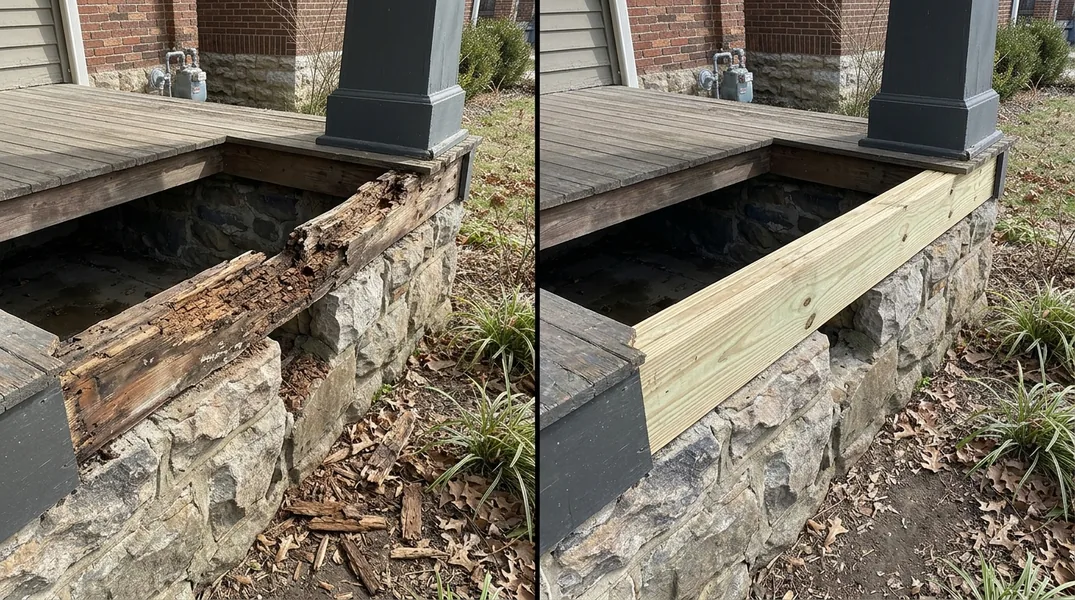
The front porch of a Victorian home is often its most distinctive feature. Those ornate railings, decorative brackets, and detailed trim work are what make these homes iconic. But a beautiful porch is only beautiful if it's structurally sound. Porch floors are notorious problem areas because they're horizontal surfaces that collect and hold moisture. Rot typically starts at the rim joist (the board that sits on top of the foundation wall) and works its way into the substructure, eventually compromising the entire porch system.
Addressing porch damage early prevents catastrophic failure and preserves the home's character. This might mean replacing just the affected rim joist and a few deck boards, or it could require more extensive work like Floor Joist & Subfloor Repair if the damage has penetrated deeper. The key is catching it before rot spreads to the house's main structure. Many homeowners delay porch repairs because of cost concerns, but a small repair today prevents a major foundation problem tomorrow. If you're noticing sagging, soft spots, or visible rot on your porch, a professional inspection can determine exactly what needs attention.
Craftsman Bungalow Wood Siding: Maintenance and Repair Strategies
Craftsman bungalows typically feature horizontal wood siding, often with a distinctive wainscoat or band of contrasting material. This wood siding repair work is foundational to keeping your home weathertight and looking authentic. The challenge is that wood siding requires regular maintenance to prevent water penetration. Paint failure is usually the first sign of trouble. When paint cracks, peels, or chalks, water finds its way behind the siding, and rot begins.
The best maintenance strategy for wood siding is preventive: repaint every 5 to 7 years, keep gutters clear so water drains away from the walls, and trim back vegetation that keeps the siding damp. When damage does occur, address it promptly. Small areas of soft or rotted siding can be cut out and replaced with matching wood, preserving the home's appearance while restoring function. Larger areas might require replacing an entire section of siding. The investment in quality wood siding repair now protects the sheathing and framing underneath and keeps your Craftsman bungalow's authentic character intact.
Historic Home Maintenance in Lexington: A Year-Round Checklist
Seasonal maintenance is critical for Victorian and Craftsman homes. Spring is the time to inspect for winter damage: check for ice dam damage, look for cracks in caulking around windows and doors, and examine siding for new soft spots. Summer is ideal for exterior painting and staining work, and for addressing any damage you discovered in spring. Fall requires gutter cleaning and inspection of roof and flashing to prepare for winter moisture. Winter itself demands vigilance about ice dams, which can force water up under roofing and into walls.
Beyond seasonal tasks, establish a regular inspection routine. Walk around your home's perimeter every few months, looking for changes in paint, new cracks, soft wood, or areas where water is pooling. Pay special attention to transitions where different materials meet: where wood meets brick, where porches connect to the main house, and where trim boards meet siding. These are the places water loves to hide and where rot establishes itself. Keep detailed records of what you observe and when. This documentation helps you and any contractor you hire understand the home's patterns and prioritize repairs.
When to Call a Professional: Wood Rot & Dry Rot Repair Near Me
Some home maintenance tasks are DIY territory, but wood rot and structural damage are not. If you notice soft wood, active rot, or suspect Beam Replacement & Load-Bearing Wall Removal might be necessary, professional assessment is essential. A carpenter can determine whether damage is surface-level or has penetrated into load-bearing members. They can also identify the moisture source, which is critical because simply replacing rotted wood without fixing the leak just means rot will return.
Lexington Carpentry specializes in historic home repair and understands the specific challenges that Victorian and Craftsman homes present. When you're ready to address wood damage or need guidance on maintenance priorities, reach out for a free estimate. Call (859) 710-6174 to discuss your home's needs. A professional inspection costs far less than emergency repairs that could have been prevented, and it gives you a clear roadmap for protecting your investment. Your historic home is worth the attention.
Looking for a professional carpentry contractor in Lexington? Lexington Carpentry responds fast for all your carpentry needs.
Get a Free QuoteOur services: Wood Rot & Dry Rot Repair · Termite Damage Repair · Floor Joist & Subfloor Repair