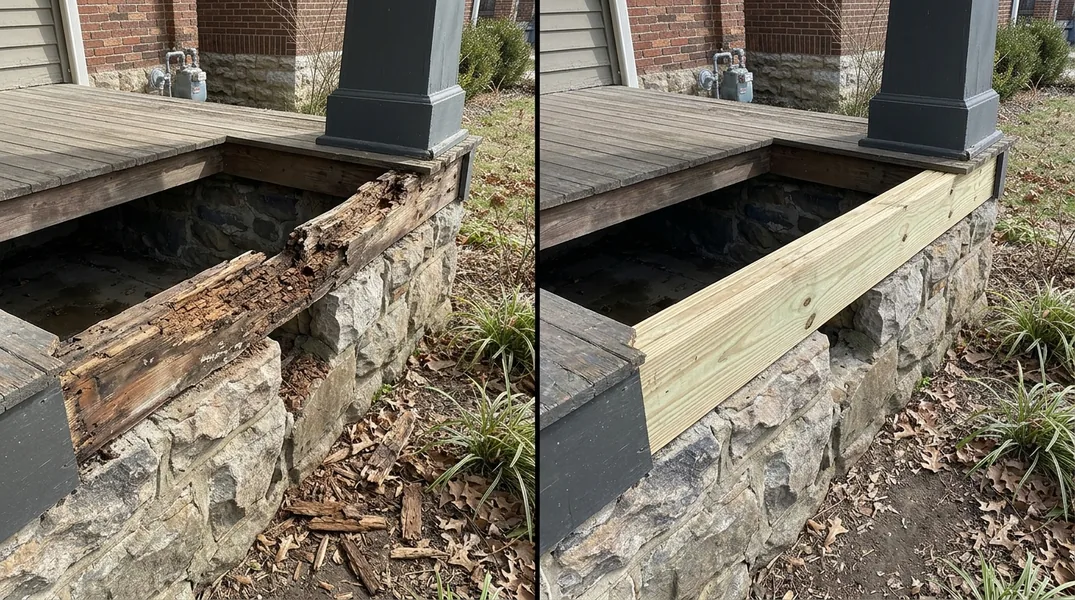
Understanding Freeze-Thaw Damage in Kentucky
If you live in Lexington, you know our winters are unpredictable. One week it's 50 degrees, the next it's below freezing. This constant cycling between freezing and thawing temperatures is one of the most destructive forces on wooden structures, and it's the primary reason why porches fail faster here than in many other parts of the country.
When water seeps into wood and then freezes, it expands. This expansion creates pressure inside the wood fibers, causing tiny cracks and splits. When temperatures rise and the ice melts, those cracks remain. Over multiple cycles, these microscopic fractures become highways for moisture penetration. This repeated expansion and contraction weakens the wood's structural integrity and creates the perfect environment for rot to take hold. Unlike a single heavy rain or one harsh winter, freeze-thaw damage is cumulative, worsening year after year until homeowners notice visible problems.
Why Porch Posts, Sills, and Steps Are Most Vulnerable
Your porch is essentially a horizontal surface that catches rain, snow, and ice. The posts that support the roof, the sills at the base of the structure, and the steps you walk on are all constantly exposed to moisture. These components don't have the protection of roof overhangs or interior walls, so they absorb water like a sponge. When freeze-thaw cycles begin, these areas suffer first because they're already saturated.
Porch posts are especially vulnerable because they sit at ground level or on concrete piers where moisture wicks upward. Wood Rot & Dry Rot Repair specialists in Lexington frequently find that rot starts at the base of posts and works its way up. Sills, which are the horizontal boards connecting posts, trap water in their grain and are subject to both top-down rain and bottom-up moisture from the structure below. Porch steps are perhaps the most obvious victims because they're walked on, which compresses the wood and forces water deeper into the fibers. Once rot begins in these areas, it spreads quickly because the wood is already compromised by freeze-thaw damage.
How Moisture Gets Into Wood and Starts the Rot Cycle
Wood is hygroscopic, meaning it absorbs and releases moisture based on humidity and temperature. On a Kentucky porch, this process happens constantly. Rain soaks into exposed wood grain, morning dew settles on horizontal surfaces, and snow melts into crevices. Even seemingly sealed wood allows some moisture penetration, especially around fasteners, joints, and areas where paint has cracked or peeled.
Once moisture is inside the wood, freeze-thaw cycles accelerate decay. The initial freezing expands water in the cells, creating stress. When it thaws, the wood doesn't return to its original state. Fungal spores, which are always present in the environment, find these damaged areas ideal for growth. Dry rot and wet rot fungi thrive in moisture-rich, damaged wood. What started as a simple moisture problem becomes an active rot infection within weeks or months. This is why addressing moisture issues early is so critical. Homeowners who ignore small cracks, peeling paint, or soft spots in their porch wood often face expensive structural repairs within a season or two.
Signs Your Porch Posts, Sills, or Steps Are Rotting
Early detection can save thousands of dollars. If your porch posts feel soft or spongy when you press on them with a screwdriver, that's a red flag. Look for discoloration, typically dark brown or black streaks in the wood, which indicate active rot or moisture damage. Paint that's bubbling, peeling, or cracking is another warning sign, as it means water is getting underneath and the wood beneath is compromised.
For rotted porch steps, check for visible crumbling, soft spots, or wood that crumbles when scraped with a tool. You might also notice a musty smell coming from the porch area, which indicates fungal growth. If your porch feels bouncy or unstable when you walk on it, the structural damage may already be significant. Don't wait for visible rot to become severe. If you notice any of these signs, contact Lexington Carpentry at (859) 710-6174 to schedule a free estimate. A professional inspection can identify problems before they require major structural work.
Porch Post Rot Repair and Prevention Strategies
Repairing porch post rot depends on how deeply the rot has penetrated. If caught early, a contractor might be able to remove only the damaged section and splice in new pressure-treated wood. For more extensive rot, the entire post may need replacement. The good news is that modern pressure-treated lumber is far more resistant to rot and freeze-thaw damage than the wood used in older homes. When posts are replaced, they're often set on concrete piers that elevate them above ground moisture, which significantly extends their lifespan.
Prevention is always cheaper than repair. Apply a high-quality exterior wood sealant every two to three years, especially on exposed porch components. Keep gutters clean so water drains away from the porch structure rather than pooling. Ensure proper ventilation under the porch so moisture doesn't accumulate. Trim tree branches that hang over the porch, allowing more sunlight and air circulation to dry the wood. If you live in Lexington or the surrounding areas and want a professional assessment of your porch's condition, Lexington Carpentry can evaluate your wood and recommend the best maintenance strategy for your specific situation.
When to Call a Professional for Porch Repair in Lexington
Some homeowners attempt DIY porch repairs, but structural issues require professional expertise. If the rot has affected more than a small surface area, if posts are leaning or feel unstable, or if multiple components show signs of damage, you need a licensed carpenter. Structural failure isn't just a cosmetic problem; it's a safety hazard. A collapsing porch can injure someone and create liability issues for the homeowner.
Lexington Carpentry has been helping homeowners address wood rot and structural damage for years. Our team can assess the extent of rot, recommend the most cost-effective repair approach, and execute the work with precision. Whether it's Wood Rot & Dry Rot Repair, replacing rotted porch steps, or reinforcing compromised posts, we handle the job from start to finish. If you're concerned about your porch, don't wait for the problem to worsen. Call (859) 710-6174 or visit our website to request a free estimate. We'll inspect your porch, explain what we find, and provide honest pricing for any necessary repairs.
Looking for a professional carpentry contractor in Lexington? Lexington Carpentry responds fast for all your carpentry needs.
Get a Free QuoteOur services: Wood Rot & Dry Rot Repair · Termite Damage Repair · Floor Joist & Subfloor Repair