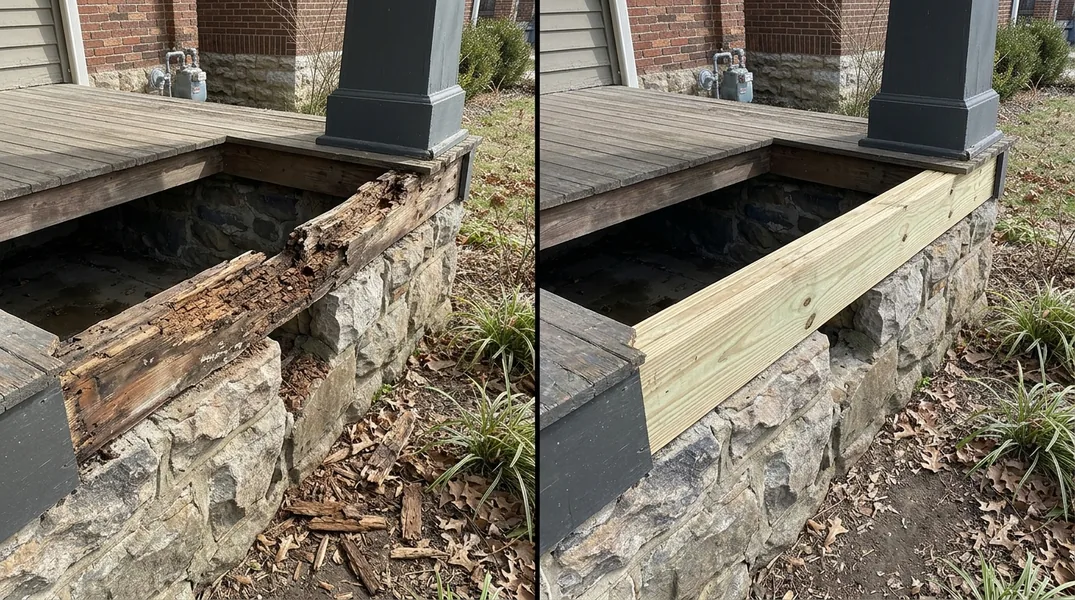
Why Homeowners Confuse Dry Rot and Termite Damage
If you've noticed soft, crumbling wood in your Lexington home, you might be wondering what's causing it. Is it dry rot? Termites? Both problems can devastate your home's structural integrity, but they require very different treatment approaches. The confusion is understandable because both conditions result in wood deterioration, yet the underlying causes are completely different.
Dry rot is a fungal disease that thrives in damp conditions and breaks down the wood's cellular structure from within. Termite damage, on the other hand, is caused by living insects that actively consume wood as a food source. Understanding the distinction between these two wood-destroying forces is crucial for homeowners, because misdiagnosing the problem could lead you to spend money on the wrong repair or treatment. That's why we've put together this guide to help you identify what's actually threatening your home.
What Does Wood Rot Look Like: Key Visual Differences
When assessing wood rot versus termite damage, visual inspection is your first line of defense. Dry rot typically appears as wood that has become soft, spongy, and crumbly to the touch. The affected wood often develops a dark brown or black color and may have a distinctive musty odor. As the fungus progresses, the wood can shrink and crack in a cubical pattern, creating deep fissures that run perpendicular to the grain. You might also notice a thin, thread-like fungal growth (mycelium) on the surface, which can appear white, gray, or reddish.
Termite damage, by contrast, leaves a very different signature. Subterranean termites, which are common in Lexington and throughout Kentucky, typically hollow out wood from the inside while leaving the outer shell intact. This creates a honeycomb-like structure beneath the surface. When you tap on termite-damaged wood, it often sounds hollow. Drywood termites leave behind small, pellet-like droppings (frass) that look like sawdust or sand. The wood itself may appear blistered or have a layered appearance, and you might notice mud tubes running along foundation walls or wooden supports where subterranean termites have traveled.
Signs of Termite Damage in Wood: What to Look For
Beyond the surface appearance, several behavioral and structural signs can help you identify termite damage. One of the most telling indicators is the presence of mud tubes or shelter tubes, which subterranean termites construct to travel between their colonies and food sources while staying protected from dry air. These tubes are typically about the diameter of a pencil and run vertically up foundation walls, wooden posts, or beams. Another common sign is the appearance of termite swarmers (winged termites) in your home, particularly in spring. You might also find discarded wings near windowsills or entry points.
If you discover small, round exit holes in wood surfaces, this typically indicates drywood termites. These holes are about 1/8 inch in diameter and appear where termites have chewed through to the surface. Additionally, you may notice wood that sounds hollow when tapped, floors that feel spongy or springy, or doors and windows that no longer close properly due to warped frames. Unlike dry rot, which develops slowly over time, termite colonies can cause significant structural damage relatively quickly, sometimes within just a few years. If you suspect termite activity, it's essential to act fast and seek professional Termite Damage Repair services.
Dry Rot Characteristics: Moisture and Fungal Growth
Dry rot thrives in environments where wood moisture content exceeds 20 percent. Despite its name, dry rot isn't actually dry at all; it requires consistent moisture to develop and spread. The fungus responsible for dry rot, typically Serpula lacrymans, feeds on the cellulose in wood and gradually weakens it from the inside out. This process can continue even in areas you might not expect, such as inside walls or beneath flooring, because the fungus can transport moisture through thread-like strands and continue spreading even if the wood appears dry on the surface.
One distinctive characteristic of dry rot is its ability to spread rapidly through your home if left untreated. The fungal growth can travel across masonry, concrete, and even through mortar joints, making it a particularly aggressive threat. You might notice fruiting bodies (the reproductive structures of the fungus) that look like pancake-shaped growths on affected wood or surrounding surfaces. These can range in color from white and gray to reddish-brown. If you detect a musty, earthy smell in areas of your home, especially in basements, crawl spaces, or around bathrooms, this could indicate dry rot activity. Wood Rot & Dry Rot Repair requires addressing both the fungal infection and the underlying moisture problem that allowed it to develop in the first place.
Where Termites and Dry Rot Typically Strike in Your Home
Both termites and dry rot favor certain areas of your home, though their preferences differ slightly. Termites are attracted to wood that is in contact with soil or has easy access from the ground. This makes foundation walls, wooden posts, floor joists, and the wooden components of your crawl space prime targets. Subterranean termites need a moisture source to survive, so they're often found near plumbing leaks, poor drainage areas, or anywhere water accumulates near the foundation. Drywood termites, while less common in Kentucky, can infest wood anywhere in your home if they gain entry, including attics and upper-story framing.
Dry rot, being moisture-dependent, typically develops in areas prone to dampness and poor ventilation. Bathrooms, basements, crawl spaces, and areas around windows and doors where water intrusion occurs are common trouble spots. Dry rot also loves areas where condensation builds up, such as poorly insulated exterior walls or spaces with inadequate air circulation. If your home has experienced water damage from flooding, roof leaks, or plumbing failures, dry rot risk increases significantly. Both problems can compromise Floor Joist & Subfloor Repair requirements and may even necessitate more extensive structural interventions like Beam Replacement & Load-Bearing Wall Removal if the damage is severe.
How to Get Professional Help: Wood Rot & Dry Rot Repair Near Me
If you suspect either dry rot or termite damage in your home, professional assessment is essential. A trained carpenter or structural specialist can distinguish between the two problems and recommend the appropriate course of action. During an inspection, professionals look for all the visual and structural signs discussed above, assess the extent of damage, and identify any underlying moisture or pest control issues that need to be addressed. Attempting to repair wood rot or termite damage without professional guidance often leads to incomplete solutions that allow the problem to return.
Lexington Carpentry specializes in identifying and repairing both dry rot and termite damage. Our team understands the unique characteristics of each problem and knows exactly how to restore your home's structural integrity. Whether the damage is limited to a small section of wood or has spread throughout your foundation and framing, we have the expertise to assess the situation and provide a comprehensive repair plan. We recommend calling us at (859) 710-6174 or requesting a free estimate so we can evaluate your specific situation and discuss your options. Early detection and professional intervention can save you thousands of dollars in repairs down the road.
Looking for a professional carpentry contractor in Lexington? Lexington Carpentry responds fast for all your carpentry needs.
Get a Free QuoteOur services: Wood Rot & Dry Rot Repair · Termite Damage Repair · Floor Joist & Subfloor Repair